 08.53
08.53
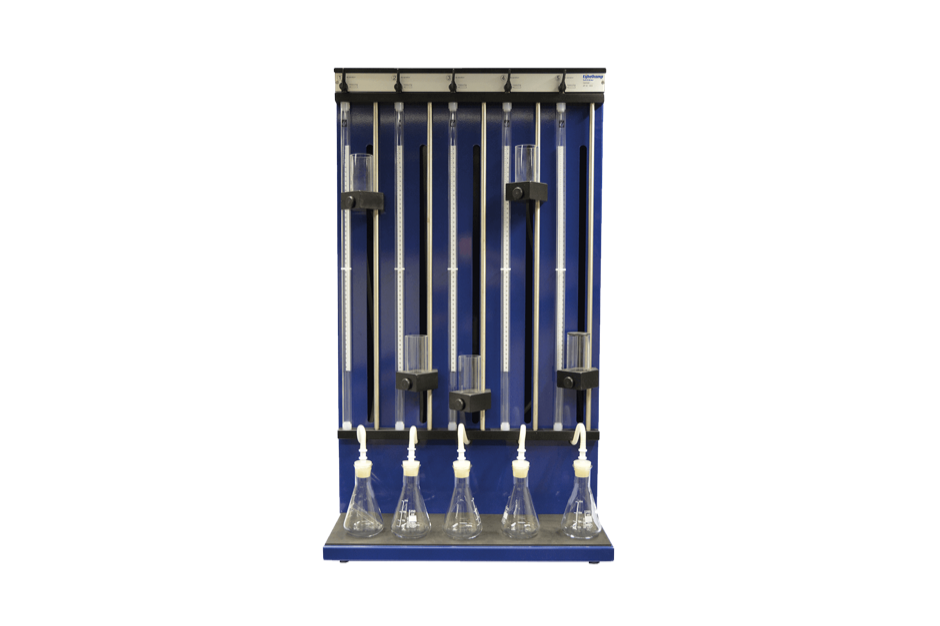
Calcimeter — Calcium Carbonate Content
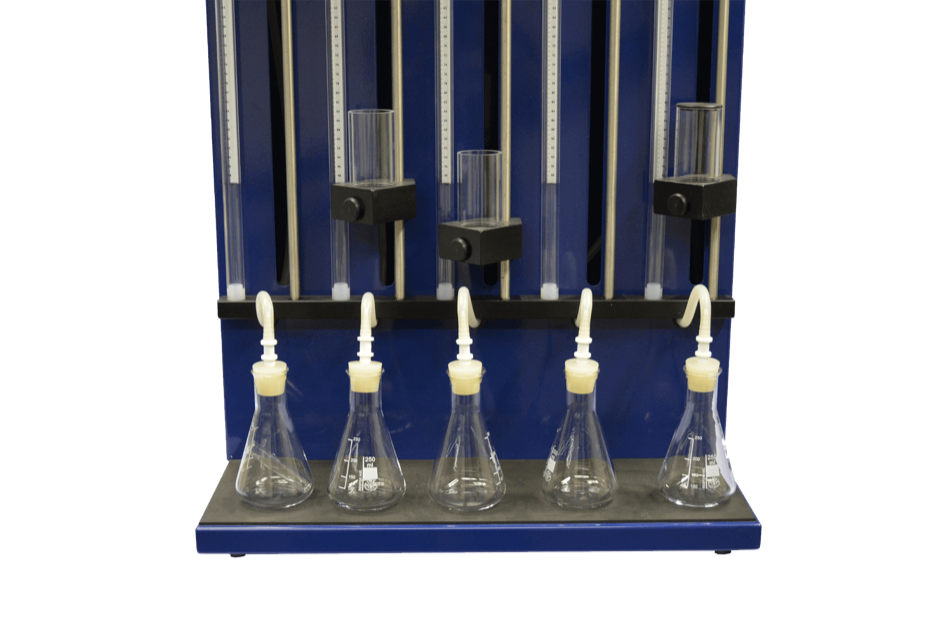
Measure the calcium carbonate content of a soil sample with the Royal Eijkelkamp calcimeter, designed for simultaneous testing of 5 samples per the method described in ISO 10693. Complete with Erlenmeyer flasks (10) and test tubes (160).
A calcimeter measures the amount of calcium carbonate (lime) in soil. Sufficient calcium carbonate in the soil indicates a favourable pH and that acidity is not excessive — important information when assessing soil quality, and an indicator that conditions are good for soil life. Determining carbonate content is an important step in soil classification and in assessing a soil's suitability for its intended use.
Design
This calcimeter is suited to use in a professional laboratory; it is built to be robust and durable, with a stable, ergonomic design that ensures the safe handling of hydrochloric acid. It comes with 5 identical setups for taking 5 measurements simultaneously, complying with ISO 10693 (Scheibler method).
Working Principle
Soil containing carbonate is treated with hydrochloric acid, and the volume of carbon dioxide released is measured. The change in water level in the burettes is a direct measure of the mass of carbon released, and therefore of the carbonate dissociated from the soil.
Applications
- Soil physics laboratory research
- Soil classification
| Number of Samples | 5 identical setups |
|---|---|
| Sample Property | Disturbed soil |
| Parameter Measured | Carbonate content |
| Weight | 30 kg |
| Packaging Size | 146×62×59 cm |
Operation Manual — 08.53 Calcimeter
Manufacturer document (PDF, English)
Installation & Commissioning
Our expert technicians provide on-site installation and initial commissioning.
User Training
We organize hands-on field training for correct and efficient use of the equipment.
Technical Service
Our Ankara-based technical team is ready for repair, maintenance and calibration services.
Spare Parts
We support you with fast supply of consumables and spare parts.